Upstream: sourcing & production
Geologists identify prospects, wells access reservoirs, and production facilities separate crude oil, gas and water. Commercial sourcing connects documented supply with buyers.
Supplier & offtaker enquiries →
Follow the industry from underground resources to the fuels and materials used in everyday life. Explore the two diagrams below—on a phone, swipe across each diagram or open it full-size—then learn where Global Exchange's sourcing, infrastructure and distribution services fit.

Geologists identify prospects, wells access reservoirs, and production facilities separate crude oil, gas and water. Commercial sourcing connects documented supply with buyers.
Supplier & offtaker enquiries →Gathering systems, gas treatment plants, pipelines, vessels, terminals and tank farms prepare, store and move supply. Natural gas can travel by pipeline or through an LNG chain.
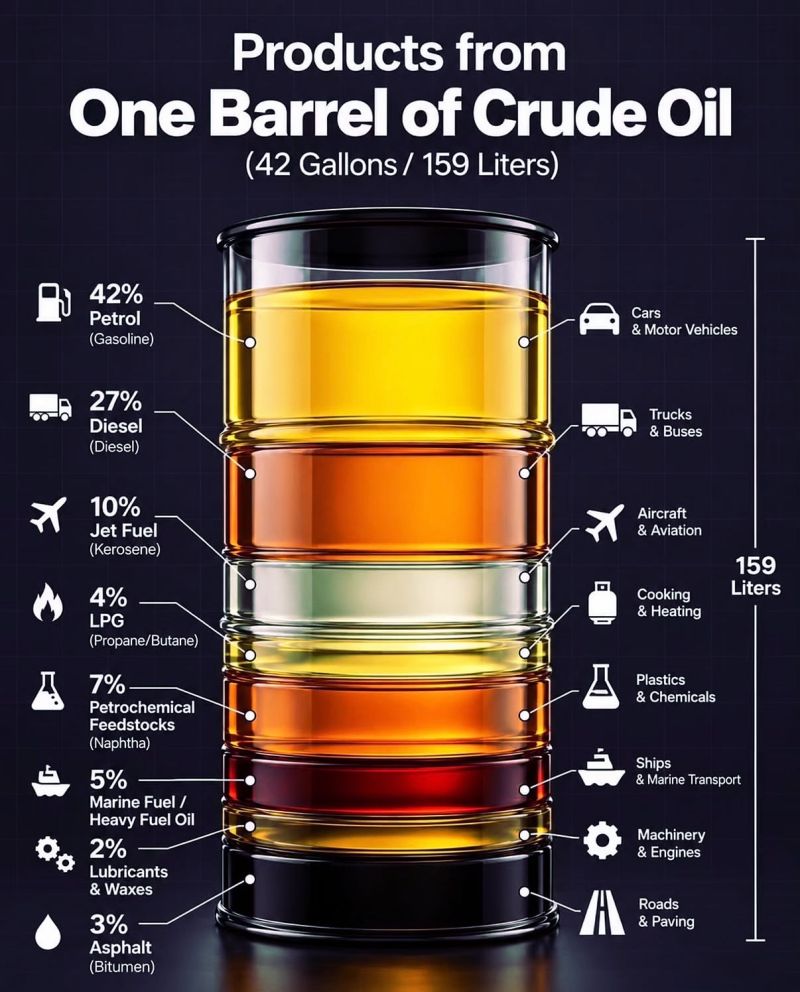
EPCM & infrastructure enquiries →Refineries transform crude into usable products. Quality testing, blending, storage and delivery connect finished fuels to retail stations, transport operators and industrial users.
Commodities & fuel supply →
Crude oil: a mixture of hydrocarbons extracted from reservoirs. Refining: separation, conversion and treatment to make usable products. LNG: liquefied natural gas, predominantly methane. LPG: liquefied petroleum gas, mainly propane and butane. They have different storage and handling requirements.
These are simplified industry diagrams, not project engineering designs or statements that Global Exchange owns every facility shown. Product yields and plant configurations vary.
Technical references: EIA: refining process and EIA: natural gas processing and gas liquids.
Project profiles, financing requirements, project-company structures and controlled investor access. Eligible projects may include a documented tokenization framework for PPP and other permitted participation structures.
Investor Portfolio →Engineering, procurement, construction management and operating infrastructure.
EPCM Division →Country and regional data connected to project records and resource opportunities.
Locations →